Showing posts with label Panasonic. Show all posts

CES 2013 "Product Trends"

On Thursday, January 10, 2013 0 comments

The following is my annual Product Trends review from the 2013 Consumer Electronics Show held in Las Vegas each year. This show is a melting pot of all the latest and greatest product offerings in the Consumer Electronic space. Tons of televisions, computer, mobile, home appliance and automation gear.

My goal is to scrub this to help figure out what are the new or maturing trends and what products to watch out for over the coming year. So let's look at how this year breaks down...

Ultra HD
The biggest push at CES this year is clearly the television manufacturers efforts to obsolete your current flat-panel television. Did you know it needed to be obsoleted? Probably not. You would probably say your current set looks great! Well, the manufacturers over the past few years have tried to hype up 3D as a reason to replace your current TV but those efforts have failed to generate much excitement. As I've mentioned here before...3D has been too much of a gimmick to me. You have this nice, bright flat-panel plasma or LCD and you put on these sunglasses that dim the overall image to get a 3D effect. And don't get me started on the tricks movie studios have been pulling to post-convert movies into 3D so they can charge more for them even though they were original filmed in traditional 2D!

But this year is a bit of a different story, this year it is all about 4K displays. Televisions four times the pixels of your 1080p Full HD flat-panel. These displays feature a resolution of 3,840 x 2,160 pixels and have been universally branded "Ultra HD". Unlike 3D, a 4K television is discernibly different...better than your current TV.


Now there is a catch...actually three BIG catches that make this more of an introduction and not really a meaningful launch for a couple years to come.

1) Like any new technology this stuff is much more expensive than the current offerings.

2) The distribution mechanisms (disks, download, etc.) to deliver these very large, high-resolution files is not really there. You won't be "on-demand" at this resolution for quite a while.

3) There will be very limited amount of content produced at that much higher resolution. Sony was showing movies originally filmed in 4K but then downgraded to 1080p to feel "almost 4K" resolution to fit on a Blu-Ray disk or a bundled package with a 65-inch display, tablet and dedicated server to hold these big movie files for $20,000+. Just expect the library of available content to be slim for quite some time following the launch of these Ultra HD televisions over the next year or so.

But I like where this is going. Not only is this image crisper and clearer, it also scales to support larger display sizes (65+ inches) while still keeping the content looking great. Also at these higher resolutions that 3D offering gets closer to being worthwhile. One big issue with 3D is that the current 1080p displays support 3D actual end up reducing the clarity of the image to support two frames at the same time to create the 3D effect. But at this higher resolution that reduction in clarity doesn't feel so noticeable. That might be different once we are use to a 4K pictures but for now is looked really nice.

One last thing before I get into the specifics of what everyone was offering at the show. There is some new display technology on the horizon called OLED. I talked a bit about it last year but this year everyone was talking about it. Currently LCD is the popular high-definition display technology out there and it is getting better each year (brighter, less glare, deeper blacks, off-angle viewing, etc.). This new OLED technology is lighter, more flexible and easier to produce in large sizes. But the big advantage is that they don't require a special layer of glass  like LCD's do which absorb some of the light...meaning OLED can be very bright, more vibrant and consume less power. It is still a new technology as you will see below but it is a pretty exciting development of the past couple years.

More on this in a bit...let's talk about what the big TV manufacturers specifically showcased -

Panasonic had a slew of new LCD and Plasma offerings but their showcase piece was their 56-inch Ultra HD OLED TV which in my opinion had the best image quality of these 4K displays at the show. The television weighed around 27 pounds and was less than half an inch thick. This was a prototype and the Panasonic CEO was clear to point out that the cost of this tech is prohibitive but they are focused on how to bring the prices down. I really loved the combination of the OLED technology at this Ultra HD resolution. Very nice!

As I mentioned earlier, I've not been a fan of the 3D offerings to date but I was impressed by LG's 84-inch Ultra HD LCD that was the largest 4K display to support 3D. With 8 million pixels to support the 3D (two frames at the same time issue) and its shear size...you really get an immersive 3D effect. And you can take one home later this year for only $20,000! At what point are they going to offering automobile-type financing for these things? ;-) With regards to their OLED offering and to give you a sense of pricing for their larger OLED televisions, the first generation shipping this year is a 55-inch (4mm thick) TV offering1080p resolution at a price around $12,000!

LG also demonstrated a 55-inch'ish slightly curved OLED to provide in theory better, more intimate viewing angles. This was just a prototype, I can just imagine this thing on my wall and me hitting the edge that sticks out of the wall every time I walk by but it was kinda cool to see.

Samsung was also loaded with similar Ultra HD goodness. They showcased the most extreme 110-inch LCD also supporting the 3,840 x 2,160 resolution. But this product is a beast. Huge stand and quite thick profile to support the glass and lighting to present this resolution at that scale. Samsung also had a 55-inch OLED that they showed last year and looks to ship this year probably similarly priced to the LG.

Sony demonstrated their Ultra HD solutions including 55" and 65" LCD versions as well as a 56" prototype OLED which made it the largest OLED Ultra HD at the show...by one inch! While the image quality was stunning I was not impressed by the integrated side mounted, non-removable speakers. Yes they were pretty but don't tell me you are going to buy a $5,000, $10,000 or $20,000+ TV and use the integrated speakers!? And like other manufacturers, Sony had an OLED Ultra HD product...it was a prototype with no pricing...matter of fact it actually didn't even work at the press conference (PC driving it died) but the units in the booth seem to work fine.

Obviously this Ultra HD tech is early in its life cycle and will come down in price over the next couple years. Definitely a technology to watch but not to prevent you from buying a contemporary LCD from Samsung or plasma from Panasonic in the near-term. I probably am due for a new TV write-up soon.

While talking about TV's...the thing everyone is waiting and watching for is the long-rumored Apple iTelevision. Apple does not participate at CES and nothing has been announced but it does make sense that a "giant iPad/app-enabled" TV leveraging the 100's of thousands of iOS apps has to be in the works inside the land of Apple R&D.

These app-enabled TVs (SMART TV's) will become more and more of a thing over the next few years. Research today shows that people are limiting their app use to mostly streaming services like Netflix but as the TV manufacturers wizen up a bit and put the same level of computational power in their tablets into the TVs and evolve the user interfaces beyond basic TV remotes...people will get more and more comfortable with the improved services available. This trend is coming...we were definitely hearing more and more mention of multi-core processor power televisions...Samsung was even offering an upgrade for some of last year's TVs to an even more powerful processing unit you can add to the back of the older sets!

Mobile, Sharing and Personalized
Now that your data (books, photos, music, videos) is digital the next thing is being able to do stuff with your data. Many manufacturers were talking about wireless transfer solutions to move digital information quickly between devices. LG, Samsung, Panasonic, Toshiba, Sony, etc. All offered solutions. Some are talking about standardizing that hopefully will come to fruition over the coming year or two. Sony's new flagship smartphone, the Xperia Z was great at demonstrating all the different Sony accessories you just tap to seamlessly interface with.

Mobile things are getting bigger. I really see this as a viable trend. With everyone in the family having personalize, unique content to consume...people will not necessarily all want to sit in front of one communal display when you can stream your own stuff to your own display. At the same time small phones, even tablets can potentially be too small to watch a movie on all the time. So here comes a trend of "bigger". Samsung and their Galaxy Note II (ie: huge smartphone), several manufacturers started showing/talking about larger tablets ranging upwards of 20 to 27-inches! Bigger portable displays to consume content while still small enough to move from room to room could be a hot new category.

Lenovo's Horizon is a great example of this "bigger" trend, a 27-inch tablet running Windows 8. Lenovo says they are targeting home use, families and schools. They see this size as ideal for 2 or 3 people to work together or experience custom games made for the larger screen real estate. EA and Ubisoft (two large game publishers) are already working on a couple games for this solution. Priced at $1,700 is a bit of an issue and a battery life when "unplugged" of only 3 hours limits its applications but  I can see how this type of solution will mature over the coming years as the power, price and weight issues get further addressed.

This year your access to content will continue to be more personalized with unique user logins and customization features. Tap your phone to a speaker and they are linked. Tap a picture on your tablet to the printer and it prints. Tap smart devices with a friend and transfer a movie clip. TVs that show a range of apps and video content based on who is viewing. Smart refrigerators...even the main console display in a new Chevy's can drag and drop apps to be configured to your personal preferences. Ford even introduced a developer program to enable 3rd parties to make apps for your car!

Speaking of mobile and taking everything with you, what about Kingston's 1 tera-byte USB drive! No price yet but a 512 giga-byte version sells for around $1,700.


Photography
In the realm of camera products at the show, I was definitely disappointed. 2012 was a spectacular year with tons of innovation, meaningful updates and new form-factors. But CES didn't offer much new stuff worth mentioning. Probably the only exception was the Fuji X100s which upgrades the retro-styled popular camera from last year to a 16.3 mega-pixel APS-C offering. The new camera also has an updated lens, faster processor and new solution that allows for even quicker focusing (something the original already did well). Expect this camera to come to market for around $1,300 in March. You can preorder the X100s at Amazon.

Sony is really on the cutting-edge of leveraging a Full-Frame (35mm equivalent) sensory is a whole range of products to provide a premium image quality over their peers. They had a compact Full-Frame called the Sony DSC-RX1 as well as a high-end camcorder that supported the Full-Frame sensor. The RX1 was probably the most agressive example of leveraging the large sensor versus a competitive set that typically holds the full-frame for their higher-end Digital SLR products. But this compact camera does come with a DSLR-price tag of $2,800!

Yes, there was an updated Nikon D5200, some new point-n-shoots from all the manufacturers, etc. I will do a more robust photography right up after the dust settles with some more real-world, hands-on details.

Gaming
I'm still looking for a "real" analog control solution for my iPhone and iPad. Apple has some "crazy" restrictions on what a peripheral can do with an App that limits the use of a real joystick controls across games on the iOS platform. I wish that restriction would go away because we could evolve games on these devices to have more advanced, serious gaming options. Even on Android there is no quality solution that is universal and easy to adopt.

So Nvidia (the maker of one of the more powerful tablet computing chips) has leveraged their next-generation CPU into a dedicated Android mobile gaming platform...Project Shield. I'm holding judgement but I am putting this on the freaky side for the time being. To fully take advantage of the product as presented at CES, you need a PC computer with a contemporary Nvidia graphics card in it. You then connect to your PC via wi-fi to stream the gameplay. Odd...huh? If I was them I would just focus on making their interfaces well understood for getting an Android game running well on their CPU and controller hardware. But they have their own plan. This is still just a prototype so we will have to wait and see where this goes.

So in conclusion...
1) Phones, tablets and TVs will grow in size, resolution and powered with more capable CPUs to make information and content more viewable/accessible.

2) Now that all your content (pictures, books, music and videos) is digital...it will become more and more important to make it easier to share and distribute these assets. This is a call to action for the manufacturers to ensure they are putting enough focus on the software and standards for connecting, pairing and sharing information.

3) The user interface needs to be evolved to make sure access to content is contextual and specific to the user(s) needs and preferences.

Yes there is a ton of other product categories but I really didn't see much "new and novel" to justify overly discussing these here in my trends section. I will be doing a couple odds and ends pieces to cover some of them in the coming week or so. This includes health and fitness, audio, photography, video, wireless storage and the like.

Wishing you a happy, prosperous and full of cool products 2013!

LarryLarry Pacey, award-winning designer tracks the latest news on consumer products, electronics, appliances, smart devices, networking and the gadget lifestyle.For the latest news follow me on:

------------------------------ OR -------------------------------


Please comment below and share your thoughts. If you have any feedback or questions, feel free to email me at wouldntmind@gmail.com.

Just my 2-cents,
Larry

A look at great flat-panel TV's but will Apple reinvent the category?

On Tuesday, September 20, 2011 0 comments

I am perplexed by the television manufacturers and the overall television/movie industries in general. It seems like they are trying to squeeze more and more features into their TVs but I just don't know if consumers care. Sure this economy has you second guessing every major purchase but what do you expect from a TV on your wall anyway?

I'd assume you expect the content you care about will be viewable at the level of quality you are willing to pay for. But do you need 480Hz refresh rates? Do you even know what a Hz does? (Before you ask, it is the number of single frames on the screen per second. A movie is typically 24 frames per second, so the more Hz typically means smoother fast motion on the screen. But you'd be hard press to tell the difference between 120 or more).

What about 3D? Internet applications? I don't know if you have tried calling up an app on some of these TVs but it can be a huge test of patience. The processors inside these TVs are for the most part underwhelming/under-horsepowered. It can take a fair bit of time just to open and search for the feature you are looking for. And are you ready for your TV to crash and need to reboot?

While I don't have all the answers to the questions above, I will endeavor to address the current landscape of flat-panel TVs and my thoughts of where things are going.

So what type of product discussion would this be without noting the latest and most viable TV's in the market currently.

Now there are some wonderful LCD displays in the marketplace and a wide range in size and features. I am going to fixate on the "sweet-spot" size of 46-50" displays. This is really the smallest range to enjoy the benefits of a full-HD 1080p display.

Let's start at the bottom and work our way up to the top...

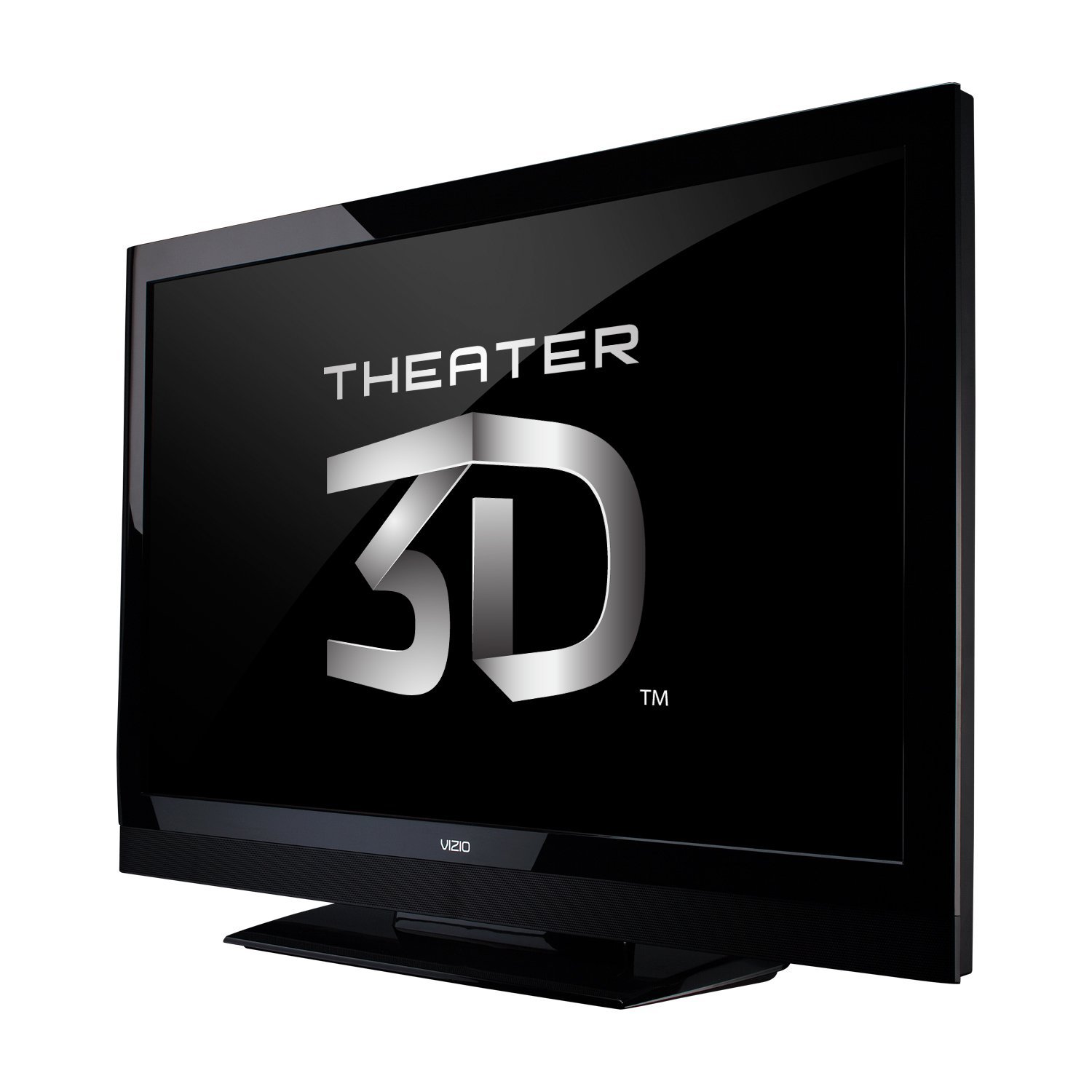
The clean lines of the Vizio E3D470VX
Best Value
I like Vizio as a brand and a good many of their products are very well reviewed. They are best know for getting you an exceptionally well featured LCD TV for your money. A standout product in their current line-up is the Vizio E3D470VX 47-Inch LCD TV. This TV was designed to address short-comings of the original expensive 3D TV's from last year. Priced at roughly $850 you get a 47" LCD that can display 1080p (high-resolution video) at 120Hz.

This TV is built on some older backlighting technologies. The current trend is to backlight the TV with an array of LEDs (very small bulbs of light stacked in hundreds of rows along the back of the display) compared to the old generic single light across the back. The LED solution allows you to adjust the darkness of an area of the screen to get a deeper black. As a result, this TV doesn't have the deep blacks I tend to prefer. Good just not great.

Don't let the backlighting issue overshadow the beautiful imagery this TV displays. It has a clean and natural color palette and its 3D picture quality is extremely competitive. There is really nothing down in this mid-$800s range that competes.

You get two passive 3D glasses similar to what you get when you go to a 3D movie at the theaters. The set also includes wi-fi connectivity to the internet and drives the included apps like Netflix, Amazon Instant Video, Pandora and Facebook.

Pros: Good price vs features/size, clean lines, very good picture quality, newer trend of passive glasses versus the chunky and expensive active glasses from last year.

Cons: Blacks not as deep as I like. The built-in speakers are weak so hopefully you are hooking up to a stereo. Was not a fan of the remote which is needed to drive many of the included apps and access the keyboard.

Conclusion: Strong contender versus the competition. Most TVs that offer this level of picture quality have moved up scale with LED lighting and can cost almost double.

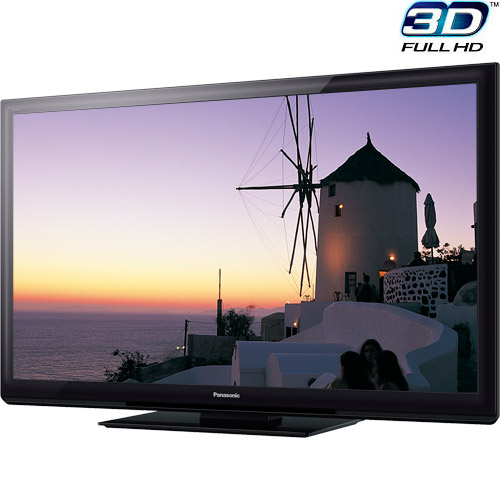
Panasonic Viera TC-P50ST30 is not the
prettiest packaging but it has it where it counts.
Great visuals but not the most visual appealing packaging
I need to come straight and admit I am bias to plasma technology over LCD. My experience has been that the plasma sets have more uniform colors, lighting and the best blacks in the business. Now LCD TVs can be incredibly bright and more resistent to bright rooms with lots of outdoor lighting filtering into the room and this is there best competitive advantage for those situations.

A great entry into the quality plasma realm is the Panasonic Viera TC-P50ST30 50" Plasma TV. This is a $900ish 3D TV but oddly does not come with any 3D glasses! You have to purchase them separately which moves the price up a bit. And these are the active variety which are not as inexpensive as the passive, movie theater style glasses but they do deliver a good 3D experience overall.

The picture quality is what you come to expect from Panasonic's plasma product line. Beautiful colors, great dynamic range, wonderful uniformity and deep blacks. This set is not a suped up version so it is not operating on the super high refresh levels of some models but watching some fast paced action in a series of movies leaves you scratching your head as to why you need more Hz? Panasonic has developed a new dejudder processor that in theory addresses the movement between the 24 frames a second of your typical Blu-ray movie.

The internet application suite includes the usual suspects; Facebook, YouTube, Netflix, Amazon Instant Video, Pandora, etc. You get a wi-fi adapter that plugs into one of the TVs USB ports to give it wireless access to our home network and internet. I definitely like the layout of the Viera Connect user interface. It is a very clean line of tiled apps.

Pros: Great video 2D and 3D imagery. Excellent black-levels. Wi-fi apps.

Cons: Unattractive packaging vs competitive set. Not the brightest set in the bunch and as such probably is not the best set for a brightly lit room. Like all "built-in" speakers...definitely need to hook up to a stereo system. No costly active 3D glasses included.

Conclusion: For the price you have an excellent 50" 2D television if you are not a tech fashion snob.

Samsung PN51D8000 is very skinny 
One to rule them all...for right now
My home is dominated by Panasonic plasmas and that is usually a very safe bet. I typically tell people to buy the best Panasonic plasma they can afford! But this year, I would have to say that the best set on the market is the Samsung PN51D8000 51" Plasma TV. This is a stunning next-generation looking package. Sleek, slim and vibrant. But we are moving up the price scale and this set typically goes for $1,700-2,000.


Samsung provides you with a 1080p plasma with an amazing screen refresh. This TV is wonderfully flawless at watching sports, fast-paced movies and videogames.

Panasonic does offer the similarly priced Panasonic VIERA TC-P55VT30 55" Plasma which is a clear competitor. Both are very comparable but I would give the Samsung a slight edge due to its overall design and category leading feature set.


Here is another 3D TV without any 3D glasses in the box and they are also the more expensive active type. The 3D glasses introduced by Samsung this year are substantially different from last year and rely on a much better/reliable solution built on Bluetooth technology. Samsung did run a promotion during the summer that included the glasses...so perhaps they will do it again for the holidays?

The wi-fi internet suite of applications and great remote with QWERTY keyboard work wonderfully. The interface is not as streamlined as the Panasonic Viera Connect but it is much more ambitious. Very nice set of apps with the one notable omission of Amazon Instant Video but it does include a more than capable built-in web-browser. Another cool feature is the ability to interface a web-camera to the TV to enable Skype video-conferencing.

Pros: Stunning plasma with amazing refresh rate. Deep blacks and very bright for a plasma. Industry leading suite of internet functionality and definitely more snappier interface than last year's models.

Cons: Expensive. Smart Hud internet application interface is busy and somewhat difficult to navigate. No included 3D glasses and they are the expensive, active type. No Amazon Instant Video.

Conclusion: You want the best, go get a Samsung 8000 series plasma. It is available in 51", 59" and 64" versions.

The Elite Comes Back
There was an era in the mid-2000's where Pioneer manufactured the finest flat-panel displays in the world. These featured industry leading plasmas with outstanding color, brightness and uncontested black-levels. But these sets were expensive. Double...triple the price of nearly comparable plasmas from the likes of Panasonic. But they were great products in their own right. A great benchmark that others pursued.

We'll the Elite is coming back. This time as a premium LCD line from Sharp. While the jury is out on the overall quality vs price debate, this is a great move that will give Sharp access to the high-end AV industry alongside Pioneer's Elite audio products.

The 60 and 70 inch displays will be launched later this year and it will be exciting to see how they match up to the top of the line Samsung and Panasonic offerings like those I mentioned above.

Another entrant...a game changer?
Rumors abound that Apple will get into the TV manufacturing business. Not the AppleTV accessory they sell today to provide iTunes content to a TV in the house. They may bring a "real TV" to market.

Initially it seems a bit out of place for them. TVs are not updated at the pace that Apple likes to reinvent their products. But Steve Jobs did mention at the All Things Digital conference last year, the obsolete industry practices that TV manufactures and cable/satellite operators function under today.

Apple is probably asking themselves questions like: Why do I have to get the "O Network" when I never watch it? Nothing against Oprah mind you...it is just an example. Why do I have to watch the shows when the network wants to air them? Obviously TIVO and DVRs in general somewhat address this but there should be more "on demand" solutions.

Why do my internet applications run so slowly on smart TVs like those I mention above and not as smooth as my computer or game console? Why can't I have access to millions of apps like those at the Apple store? Or access to my music and video library directly on all the TVs in the house?

I'd like my content and applications to flow from computer, tablet/smart-device and TV as I move from room to room.

Look at what Apple has done. Truth be told, Apple invented the iPad first but they decided the best, most cost-effective and broadest offering would be to miniaturize it and make a phone...thus the iPhone was launched. Once the iPhone was well underway, they moved back up the scale to the iPad. So if you wanted to move up the scale again, why not a big iPad you mount on the wall? It would share all the content, applications and services of its smaller siblings.

It makes some sense.

Now a nice practical offering would be to have a "computing module" that could be swapped out in the monitor as people are not going to unseat their mounted TV on the wall and display technology doesn't necessarily move at the pace that it needs replacing every year or so. But Apple is not about practical offerings so I am not holding my breath on that feature like I am not holding my breath for a SD memory slot on an iPhone 5 or iPad 3!

A new TV standard could really shake up the old-school industry which is in a slump. 3D did not make everyone run out and trash their flat-panel TV they bought 2-years ago. The apps are nice but kinda uninspired...no innovation. Content is so scattered across the web...a new standard is needed and Apple may have the horsepower and consumer awareness to make it happen.

Just my 2-cents,
Larry

Cameras, cameras, cameras and a solid compact zoom camera

On Sunday, August 21, 2011 3 comments

I will never claim to be a photog but do enjoy taking pictures. I find that it is a creative vent for me that both helps to satiate my desire to create something original with the simple click of a button...all the way to the complex of getting up early to take all my gear out for some beautiful landscapes in the morning light.

That said, I have my trusty Canon 5D Mark II with all its lens/accessories and my ever present Canon S95 which is arguably the finest "pocketable" camera in existence today. These two get me through pretty much any photographic situation. I do have a third recent addition but I have not fully vetted it and it makes a lot of compromises to accomplish one task...the Panasonic TS3 is a rugged, waterproof camera that allows us to take it to the pool, beach and on watercraft. We love taking underwater photos while playing in the pool.

Shot taken with Canon 5D Mark II
w/EF 24-105mm f/4L IS USM lens
If you want to get inside my thought process for choosing cameras lets address why I have the Canon 5D Mark II and am eagerly awaiting a Mark III? And keep in mind I was a Nikon user for many years going back to film (pre-digital). The Canon offered two great features for me to jump the chasm and leave all my Nikon lens and gear behind. Initially it was the first digital SLR (single lens reflex: the ability to look through the viewfinder and see exactly what will be captures on the photo) to offer 1920x1080 high-definition video capture at 24 and 30 frames-per-second, cinematography caliber when combined with its high-end camera controls for depth of field and assortment of lens options. And the 21 mega-pixel full-frame sensor (the chip that captures the image) inside the camera is equivalent in size to an old 35mm film negative thus being large enough to provide amazing clarity. Most digital cameras have a fraction of a full-frame (35mm size) chip. So when you hear a camera is 14 mega-pixels, it doesn't mean it is better if the sensor is really, really small. So it's important to know what you are getting and not just look at the number of pixels. But what I noticed most about the Canon versus the Nikon equivalent was the colors. I love the vibrance, almost surreal palette it creates within a photo.

Shot this with the Canon S95
during a drive-by near Versailles
Why the Canon S95? In my opinion, this is the smallest, most pocketable, high-quality images camera on the market. The best photo can only be taken if and when you have a camera. So size matters...small size...something portable. It is important for me to have a camera available most of the time. I have terabytes of photo libraries with images from the 5D and the S95 in the same set and I would be hard pressed to tell which photo came from which camera. The S95 is a marvel of size and features from simple point-and-shoot to the ability to manually tweak camera parameters like aperture and shutter speed. The lens on the camera is amazing. With an F2 aperture setting at its widest opening, the camera can let in so much light that in most settings you don't need a flash! It's almost magical. The only challenge with the S95 is it zoom. It is only a 3.8x zoom. Good but not great. So many times when I am traveling, I really want to zoom in on a distant object or scene.

So I have a quandary. There are times when I don't want to haul the big gun 5D around but would love to have a strong travel zoom camera. I'm talking AMZAP (As Much Zoom As Possible) caliber BUT it still needs to be "pocketable" or as close to pocketable as possible, otherwise I'd bring the 5D with me.

My father has the predecessor to the Panasonic ZS10 but this latest version seems to have gone backwards on image quality, so it is out of the running.

I won't talk much about the Nikon S9100 which is getting poor reviews from end users though its specs seem to fit the bill. The Fujifilm F550EXR which seems to be suffering the same fate of the Panasonic ZS10 where its image quality has gone backwards from the previous models.

The Sony HX9V has some great, unique features and seems to be up there as one of the better overall compact travel zooms but for some reason I've just not been a Sony camera fan. I owned a few Sony cameras in the early digital camera age and was never satisfied with their image quality. Sony actually makes the sensors for many camera companies today so in theory they probably should be worth another look. Some day I am going to try a Sony camera again.

As it stands right now if I had to pull the trigger on a compact travel zoom camera, I am leaning toward the Canon SX230HS. It will fit in a pocket, offers 12 megapixel resolution and a 14x zoom (equivalent to nearly a 400mm lens) with optical image stabilization. It shoots 1080p high-def video and has a built-in flash. From my experimentation with the camera at the local camera store and the reviews online, this camera seems to balace the size, zoom and image qualities the best with image quality being key.

Lastly, a solid video feature like the SX230HS has is becoming crucial for me in any camera as I am finding that I take most of my videos with cameras nowadays and don't use my camcorder much anymore. The only thing the camcorder had was a great zoom which a sold zoom camera would address for me.

Below is a YouTude video demonstrating the zoom and video capture aspects of the SX230HS.